Language is the basis for effective communication. Without it, we wouldn’t be able to express ourselves or our written ideas. There are different types of communication. E:g oral and written forms. It helps us interact well, Express our personal and interact sociably, and go after our areas of interest and study and dreams and explain our artistic vision. Language is our basis for thinking and effective communication. Without it, we wouldn’t be able to express ourselves or our written ideas. Learning to use different types of language E;g, oral and written forms, helps us communicate well, explain our personal and interact socially, and go after our areas of interest and study and dreams and apply our artistic vision. Language is our basis for thinking. Oral communication is the most comfortable because I can explain my ideas face to face very well.
I will know if the receiver gets my message well or not from the facial expression. My educational background as an assistant professor in medical psychology and health educator helps a lot. Feel free with all types of communication. I can communicate well all the time. Sometimes the only one type of communication becomes effective when I get shocked.
Because I came from different backgrounds and the English language is not my mother tongue. I need to work hard to improve my English language. I create a list of three things that can help me to be a more effective communicator: 1- Read more books and magazines. 2- Listening carefully to everybody talks to me, listening to films and movies without translation to my language. 3- Rewrites any wrong sentences and text my friend and kids in English and ask them to re-correct me.
How have my skills grown in: reading, writing, and oral communication?
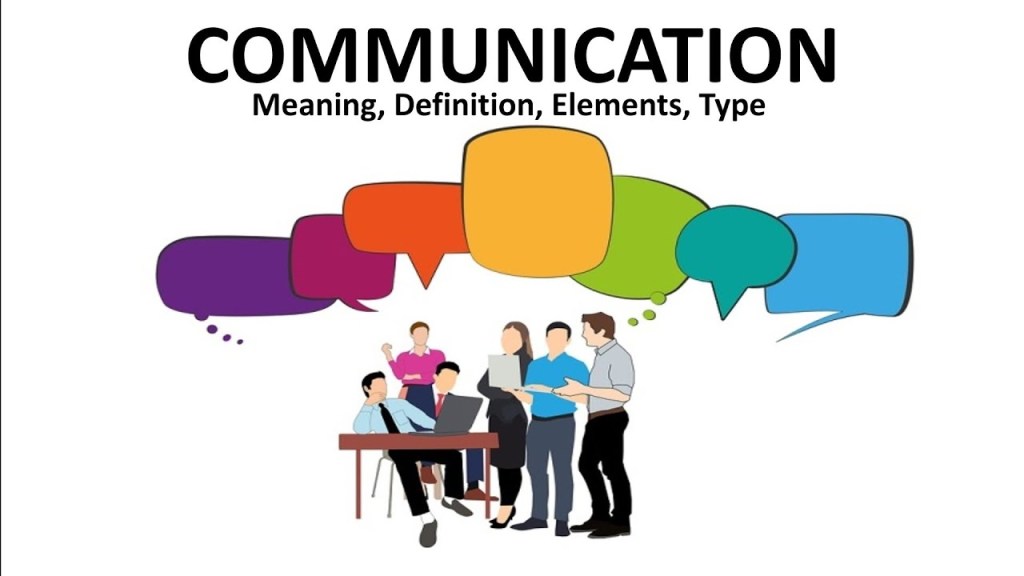
Positive communication occurs as a result of the sequence and reactions needed to let it appear in the excellent process. It consists of various elements concerning the message and how to delegate it and the sender of the message, his or her voice, type of tone, body language, and the exact meaning of the message, purpose of the message, receiver, and recognition of it. I learned a lot from this course, the basics of the the more I read and write, the more I increase my vocabulary and can explain my thoughts carefully and persuasively to the recipient. Improving my understanding of communication also helps make me a lot through learning stages as a student. Real communication processes are three: 1- Understanding skills (knowledge) and forming sentences, understanding the content, and explaining it consistently and reasonably.
This will be grasping through reading. I try to improve my reading skills through below stages: ● Every day I determine two hours for reading a book, holy Quran, or magazine to develop my vocabulary.
As I have memory impairment, it helps me to refresh it, and let me know the local language, and reduces my stress that affects my study process. ● While I am looking for a general review, I focus on the reason behind writing whatever I read, as well as try to tell my kids about what I read and how I understand the ideas. Sometimes I found one of them reading the same book which then led to a great discussion. ● During reading and discussion, I used to take notes considering the mystery or difficult information to help me to remember it later in writing the summary. In summary, I try to write the main ideas and stress on a relevant and important one. It helps me a lot in remembering everything. 2- Regarding the improvement of my writing skills, every time I talk to myself: if my writing skills are not clear, it means that nobody will understand any material I prepare or the meaning behind it. People will feel confused. So I worked hard to improve my writing skills through many stages: ● First of all, determine the main subject I need to write about and write it clearly. ● Write some selective points I need to explain. Use easy sentences and avoid complications, details, and try to make an easy explanation for them whenever it gives understanding. ● Using fewer adverbs leads to clear and simple sentences. I imagine there is an audience around me and try to read my subject to them. This method helps me to start an immediate correction. ● I always accept critical ideas about my writing to improve my writing skills. In addition to preparation and continuous practice make the topic excellent. Careful listening, transparency and courage, kindness, giving proper feedback and a suitable tone of voice lead to excellent verbal skills. Engaging in activities such as reading the monthly magazine and a daily journal, listening to poems, attending discussion clubs, making internet searches about all types of things. In regards to writing, I used to prepare the written lecture by myself, and using social media helps more to develop writing skills.
What is narrative, persuasive, descriptive and expository communication:
● Expository – Writing in which the author’s goal is representing the subject to the reader. ● Persuasive – Writing that events the view of the writer and tries to convince the reader. ● Narrative – Writing in which the author tells a tale. It could be reality or fantasy. ● Descriptive – A kind of informative writing that associates the five senses to design an idea for the reader. This writing includes description and particular aspects.
I believe in the future that I will use all kinds of visual, non-verbal, verbal and written communication suitably and appropriately, since I used to mix them up. Now, however, the idea has become clear, and I have benefited from this course, which makes me utilize it in the future.
Strategies I used to work through all challenges I faced:
This course, for me, is a big challenge. From the year 2000, I had no relationship with the English language, except oral communication. The biggest challenge I suffered from ischemic brain disease and concussion, which affected the linguistic parts, especially the English language, and caused memory partially lost also. Thanks to God, I overcame that through reading and repeating sentences to memorize and continuously review and try to understand complicated sentences by translating them into Arabic and then explaining the different meanings of them in English.






 communication